


Key Takeaways
- Children develop two complete sets of teeth in their lifetime, with the first set serving as placeholders that guide the second into proper position.
- Baby teeth typically begin erupting around six months of age, and a full first set is usually in place before a child turns three.
- Adults have more teeth than children because the back jaw expands to accommodate molars that never appear in childhood.
- The first set of teeth has thinner enamel and smaller roots, making them more vulnerable to decay despite being temporary.
- Losing baby teeth too early or too late can affect speech, chewing, and the alignment of adult teeth.
- Good oral hygiene habits formed in childhood directly influence the health of adult teeth decades later.
- Regular dental checkups starting by age one help catch problems before they interfere with normal development.
Humans are diphyodont, meaning we grow two separate sets of teeth over our lifetime. This biological design is not an accident. The first set emerges during a period of rapid skull and jaw growth, while the second set arrives once the face and mouth have matured enough to support larger, stronger teeth built to last decades.
The timing matters more than most parents realize. A baby’s jaw is simply too small to hold adult-sized teeth, yet infants and toddlers still need functional teeth for chewing solid food, forming early speech sounds, and smiling. Nature’s solution was to create a smaller, temporary set that serves these needs during early childhood and then steps aside at the right moment.
Understanding this blueprint helps parents appreciate why both sets deserve careful attention. The temporary teeth are not disposable just because they fall out. They play an essential role in guiding the permanent ones into place and shaping the development of the jaw itself.
When Teeth Appear: A Timeline Parents Can Rely On

Tooth eruption follows a reasonably predictable schedule, though some variation between children is completely normal. According to the Dental Health Foundation, baby teeth usually begin to emerge around six months of age, with most children having a complete first set by about two and a half years old. The American Dental Association reports a similar pattern, noting that primary teeth gradually push through the gums over roughly the first two and a half years of life, with full eruption usually complete by age three.
The lower central incisors almost always appear first, followed by the upper central incisors a month or two later. Lateral incisors, first molars, canines, and second molars follow in a general sequence, though individual children may vary by several months.
Here are the typical pediatric dental milestones parents can expect:
- Lower central incisors: 6 to 10 months
- Upper central incisors: 8 to 12 months
- Lateral incisors: 9 to 16 months
- First molars: 13 to 19 months
- Canines (cuspids): 16 to 23 months
- Second molars: 23 to 33 months
What Happens If Teeth Erupt Late?
Delayed eruption can worry parents, but a few months of lag is rarely cause for concern. Genetics plays a major role, and a child whose parents were late teethers often follows the same pattern. However, if no teeth have appeared by 18 months, a pediatric dentist should take a look to rule out nutritional deficiencies, thyroid issues, or other developmental factors worth investigating.
How the Two Sets Compare in Number, Size, and Structure
The most obvious difference between primary and permanent teeth is quantity. According to Johns Hopkins Medicine, children grow a total of twenty primary teeth while adults eventually have thirty-two permanent teeth. The extra twelve teeth in adulthood include premolars and third molars (wisdom teeth), which only emerge once the jaw has grown large enough to hold them.
Size and color also differ noticeably. The Cleveland Clinic notes that baby teeth are both smaller and whiter than the adult teeth that eventually replace them. This whiter appearance comes from a thinner, more translucent enamel layer. Permanent teeth often look slightly yellower by comparison, which can alarm parents when the first adult incisors come in next to the remaining baby teeth. This contrast is normal and expected.
Structural differences go deeper than appearance:
- Enamel on baby teeth is about half as thick as on adult teeth
- Primary tooth roots are shorter and thinner
- Pulp chambers in baby teeth are proportionally larger
- Dentin is less mineralized and more porous
- Primary roots naturally dissolve to allow the tooth to fall out
These differences explain why cavities can progress much faster in young children. The thinner enamel offers less protection, and decay reaches the sensitive inner pulp more quickly than it would in an adult tooth.
The Role of Baby Teeth in Lifelong Oral Health
Many parents assume baby teeth do not really matter because they are temporary. This assumption is one of the most common misconceptions in pediatric dentistry. Primary teeth hold space in the jaw for the adult teeth developing beneath them. When a baby tooth is lost too early due to decay or injury, nearby teeth can drift into the empty space, blocking the permanent tooth from erupting correctly.
Baby teeth also contribute to speech development. Children learn to form sounds like “th,” “s,” and “f” partly by positioning the tongue against the front teeth. Missing or damaged teeth can create lisps or articulation delays that may persist even after the adult teeth come in. Chewing ability is another often-overlooked factor; children with painful or missing teeth sometimes avoid certain foods, which can affect nutrition during critical growth years.
Understanding why early dental visits matter for child development involves recognizing that care extends far beyond checking for cavities. Dentists monitor jaw growth, bite alignment, and the timing of tooth eruption, catching subtle issues before they turn into costly orthodontic problems down the road.
Why Cavities in Baby Teeth Still Need Treatment
Some parents hesitate to treat cavities in teeth that will fall out anyway. However, untreated decay can spread to the developing permanent tooth below, cause severe pain, lead to serious infections, and even require emergency extraction. Treating cavities early preserves the natural timing of tooth loss and protects the adult tooth waiting underneath.
How the Transition Between Sets Actually Works
The shedding process begins around age six and typically continues until about age twelve, though some children start as early as four and others not until seven without any cause for concern. The first teeth to fall out are usually the same ones that erupted first: the lower central incisors, followed shortly by the upper central incisors. From there, the lateral incisors tend to go next, with the canines and primary molars generally holding on until somewhere between ages nine and twelve. As a permanent tooth pushes upward from inside the jaw, special cells called odontoclasts dissolve the root of the baby tooth above it in a gradual, carefully regulated process. By the time the primary tooth falls out, almost nothing of the root remains, which is why lost baby teeth look so small and often surprise parents who expect to see something resembling the long roots of an adult tooth.
The sequence of permanent tooth eruption often overlaps with baby tooth loss, creating what dentists sometimes call the “ugly duckling stage.” Children may have gaps, crooked new teeth, and mismatched sizes for several years before everything settles into place. Front teeth may appear enormous against a child’s smaller face, incisors can come in with slight rotations or flare outward, and the jaw itself is still growing to accommodate the larger permanent set. This phase is almost always temporary and resolves on its own as the jaw grows, the facial bones mature, and the remaining permanent teeth erupt into position to guide their neighbors into proper alignment. Understanding this stage is one of the key pediatric dental milestones that helps parents resist the urge to panic over every crooked new tooth.
Another important part of the difference between primary and permanent teeth during this transition is that not every new tooth replaces a baby tooth. The first permanent molars, often called the “six-year molars,” erupt behind the existing baby molars without any tooth falling out to make room. Many parents miss these entirely because there is no wiggling, no loose tooth, and no tooth fairy visit to mark the occasion. These molars are critically important because they help establish the bite pattern for every tooth that follows.
Common signs the transition is progressing normally include:
- Wiggly baby teeth starting around age five or six
- Permanent molars appearing behind the baby teeth (not replacing any)
- Gaps between remaining baby teeth as the jaw widens
- New teeth coming in slightly larger and more yellow than their predecessors
- A symmetrical pattern, with teeth on the left and right sides shedding or erupting within a few months of each other
- Mild, intermittent soreness in the gums where new teeth are breaking through
Parents should contact a dentist if a permanent tooth erupts behind a baby tooth that has not loosened (sometimes called “shark teeth”), if teeth are lost significantly out of sequence, if a baby tooth is lost very early due to trauma or decay, or if a child experiences pain beyond mild tenderness. Other warning signs include permanent teeth that fail to appear within six months of the baby tooth falling out, visible swelling or pus around an erupting tooth, or persistent bleeding that does not stop with gentle pressure. Early evaluation in these situations can prevent crowding, alignment issues, and the need for more involved orthodontic work later on.
Protecting Both Sets Through Daily Care
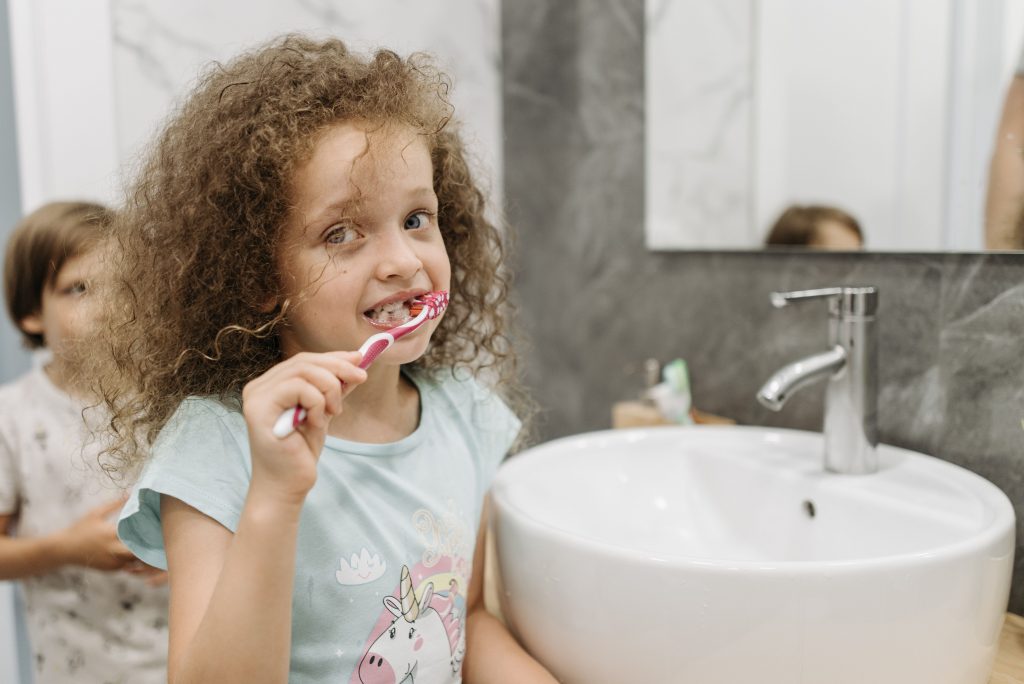
Oral hygiene habits established in early childhood have measurable effects decades later. Children who learn to brush twice daily, floss as teeth touch, and limit sugary drinks develop stronger routines that protect their adult teeth through adolescence and beyond. The bacteria responsible for cavities, primarily Streptococcus mutans, colonize the mouth in infancy, often transmitted from caregivers through shared utensils, pre-tasted food, or even kisses on the mouth. Reducing bacterial load early makes a real difference, which is why many pediatric dentists now encourage caregivers to maintain their own oral health during pregnancy and the first years of a child’s life. Understanding the difference between primary and permanent teeth also helps parents recognize that habits formed around baby teeth directly shape the environment that adult teeth will inherit.
Fluoride plays a central role in protecting both sets. Primary teeth benefit from the remineralization fluoride provides, especially given their thinner enamel, which is roughly half the thickness of permanent enamel and far more vulnerable to acid erosion. Permanent teeth, once erupted, continue to strengthen for several years after they appear through a process called post-eruptive maturation, during which minerals from saliva and fluoride sources harden the outer surface. Topical fluoride treatments at dental visits add protection that regular brushing cannot match, and in some communities fluoride varnish is applied as early as the first dental visit around a child’s first birthday. Families relying on well water or bottled water without fluoride should discuss supplementation with their pediatrician, as the natural fluoride content of tap water contributes significantly to lifelong cavity resistance.
Practical daily habits that support both sets include:
- Brushing twice a day with an appropriately sized toothbrush
- Using a smear of fluoride toothpaste for children under three
- Switching to a pea-sized amount of toothpaste after age three
- Avoiding bottles of milk or juice at bedtime
- Scheduling dental checkups every six months
- Introducing flossing as soon as two teeth touch each other
- Limiting sticky snacks and sweetened beverages between meals
- Replacing toothbrushes every three to four months or after illness
- Supervising brushing until around age seven or eight, when fine motor skills are developed enough for thorough cleaning
- Rinsing with water after meals when brushing is not possible
Diet matters just as much as brushing. Frequent snacking keeps the mouth in an acidic state that erodes enamel, while meals followed by water help neutralize acids and rinse away food particles. Each exposure to sugar or refined carbohydrates triggers roughly twenty minutes of acid attack on the teeth, so grazing throughout the day is often more damaging than eating a sweet dessert in one sitting. Crunchy fruits and vegetables such as apples, carrots, and celery stimulate saliva flow and gently scrub tooth surfaces, while cheese and plain yogurt provide calcium and phosphates that support remineralization without feeding the bacteria that cause decay. Sugary gummy vitamins, dried fruit, and fruit-flavored pouches are often overlooked culprits, since their sticky texture clings to grooves and prolongs acid exposure far beyond what parents might expect.
When to Consider Sealants and Other Preventive Care
Dental sealants are thin protective coatings applied to the chewing surfaces of molars, where deep grooves can trap food and bacteria that even careful brushing cannot reach. They are especially useful on newly erupted permanent molars, which are most vulnerable to decay in the first few years after they appear because their enamel has not yet fully matured. Many pediatric dentists recommend sealants shortly after the six-year molars come in and again when the twelve-year molars erupt. The procedure is quick, painless, and requires no drilling or anesthesia, and research consistently shows that sealed molars are up to 80 percent less likely to develop cavities in the first two years after application. Sealants typically last several years and can be reapplied or touched up during routine visits if they begin to wear down.
Mouthguards become important once children start playing contact sports or activities with fall risks, including soccer, basketball, skateboarding, and even recreational biking. A single accident can knock out a permanent tooth that will never grow back, and a properly fitted guard dramatically reduces that risk along with the chance of jaw fractures, lip lacerations, and concussions. Custom-fitted mouthguards from a dentist offer the best protection and comfort, but boil-and-bite options from a sporting goods store are a reasonable starting point for growing children whose mouths change rapidly. Tracking these preventive steps alongside other pediatric dental milestones helps parents stay ahead of potential problems rather than reacting after damage has already occurred.
Common Myths Parents Still Hear
Misinformation about children’s teeth circulates widely, even among well-meaning relatives. Separating fact from folklore helps parents make better decisions.
- “Baby teeth don’t need fillings because they fall out anyway.” Untreated decay causes pain, infection, and damage to the adult teeth forming below.
- “Teething causes high fevers.” Mild temperature elevation can occur, but a true fever points to something else and deserves medical attention.
- “You shouldn’t brush a baby’s gums before teeth appear.” Wiping the gums with a soft cloth after feedings reduces bacteria and establishes the habit early.
- “Thumb-sucking always ruins the bite.” Occasional thumb-sucking in young children is usually harmless; concerns arise mainly if the habit persists past age four or five.
- “Only candy causes cavities.” Crackers, chips, dried fruit, and juice can be just as damaging because they cling to teeth or bathe them in sugar.
Final Thoughts
Raising a child with healthy teeth is not about perfection; it is about consistency and informed decisions over many years. Both sets of teeth serve distinct purposes, and treating the first set as a throwaway stage sets up unnecessary problems for the second. By understanding how the two systems work together, parents can approach everything from a late-erupting incisor to a stubborn baby molar with calm perspective rather than guesswork.
The payoff is substantial. Children who grow up with strong brushing habits, regular dental visits, and well-protected baby teeth tend to carry those advantages into adulthood with fewer cavities, straighter smiles, and lower lifetime dental costs. The habits built around that first wobbly tooth often last a lifetime.
If anything about your child’s teeth seems off, whether it is the timing, the appearance, or the sequence of changes, a conversation with a pediatric dentist is almost always worth the visit. Early guidance costs little and often prevents much larger problems down the road, giving your child the best possible foundation for a healthy smile at every stage.